
When considering an HMO (House in Multiple Occupation) investment, understanding planning permission requirements is crucial.
Here’s a breakdown to help you navigate the process, especially if you’re investing in Maidstone or across Kent.
Before we jump into it, there’s some early navigating to do. Building work, so adding extensions to a property, is one element that may require planning permission. But ‘change of use’ may also require planning permission.
So planning permission doesn’t just relate to building works at a property. And moving or altering walls or adding bathrooms in a property doesn’t require planning permission either. It may require building control signoff, but that’s for another day. We’re just talking about planning permission today.
Ultimately, planning permission doesnt just relate to building work. Let’s jump in.
C3, C4, and Permitted Development Rights (PD Rights)
The property that most of us live in isn’t just “a house” in the eyes of town planners—it’s classified as a C3 Dwellinghouse. An HMO, on the other hand, is a C4 Dwellinghouse if it accommodates between 3 and 6 unrelated individuals sharing amenities.
This is a property’s ‘use class’, and it’s common to hear phrases like ‘C3 to C4’ in the investor vernacular.
For larger HMOs housing 7 or more occupants, the classification shifts to Sui Generis, a Latin term meaning ‘a class of its own.’ This designation applies beyond property classifications and refers to unique uses, even in areas like animal species.
Moving between these use classes is controlled by the local council’s Town Planning Department, and requires planning permission, as much as building an extension might.
When Do You Need Planning Permission?
If you’re changing the use of a property from C3 to C4, you might not always need full planning permission. This change of use often falls under Permitted Development (PD) rights, meaning you can convert to an HMO up to 6 persons without a formal planning application.
PD exists to make certain small works easier to execute for the homeowner, so long as they fall within a set of certain strict criteria. In many cases and locations, there are PD rights to change the use class of a C3 property to a C4 property, which makes up to a 6 Bed HMO (6 persons) an attractive strategy for a lot of investors as it’s easier paperwork.
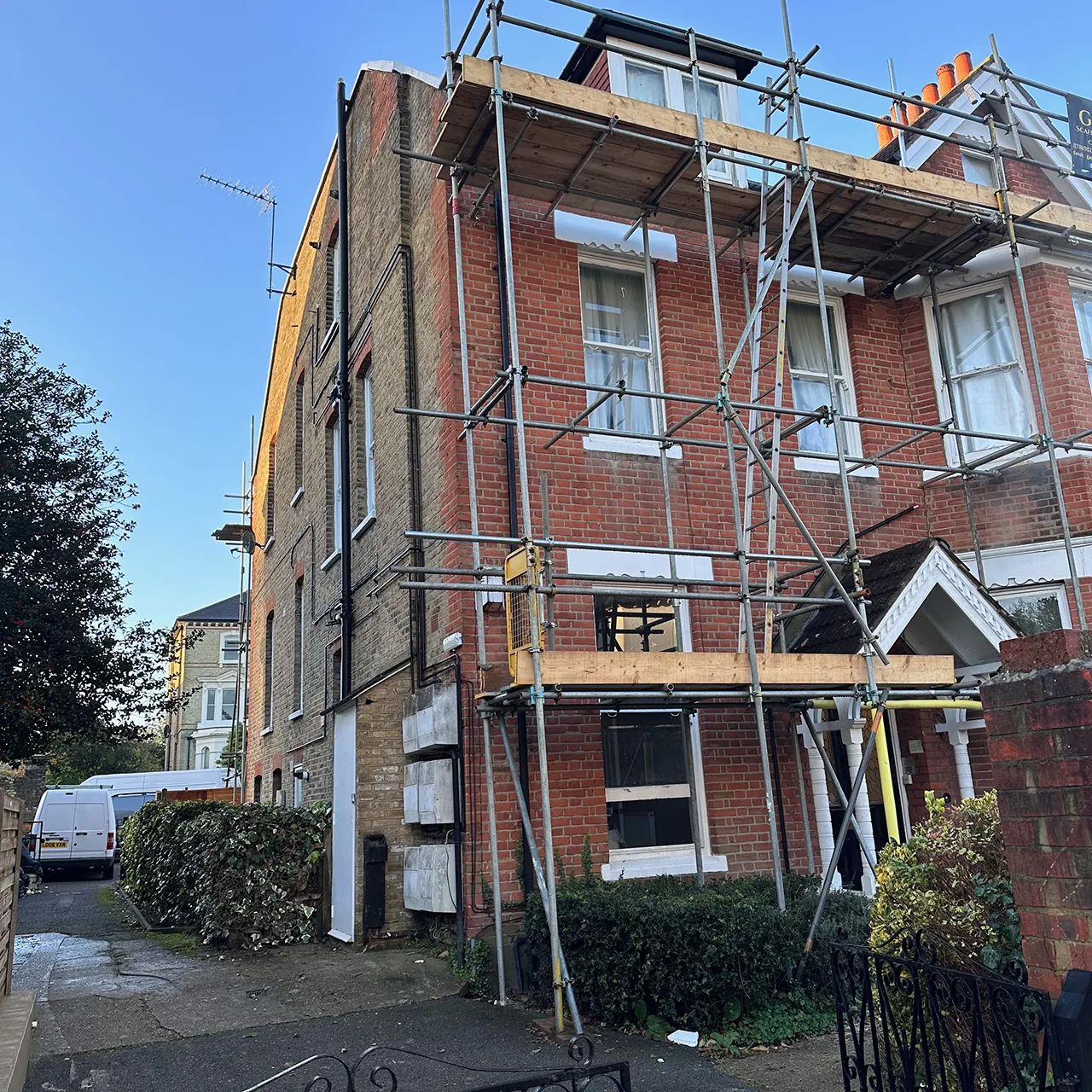
However, some areas have Article 4 Directions, which remove PD rights, requiring you to apply for planning permission even for C3 to C4 conversions. This is when we hear phrases like ‘it’s an Article 4 area’, and investors turn their nose up as they will need to apply for planning permission for change of use.
Always check if an Article 4 Direction applies in your target area. There are maps outlining areas with Article 4 directions on the council’s website.
It’s worth noting, that not all Article 4 directions are in place to limit HMOs. Reading the guidelines as to why there is an A4 direction in place, can bring a lot of clarity. The suspension of Permitted Development rights in an area, may be due to there being properties with a certain character that the council are trying to protect, or the restriction might only be in place to protect certain features of the properties within the A4 area, so it’s worth looking into.
Article 4 isn’t an ‘anti HMO’ policy, as many seem to think…although it does affect HMOs to a large extent admittedly. Just not always.
Certificates of Lawfulness: What are they?
A Certificate of Lawfulness is an official document issued by the local planning authority, such as Maidstone Borough Council, that confirms the lawful use of a property or development without the need for full planning permission. It provides legal proof that the existing use, development, or any changes made to the property comply with planning laws.
Are They Necessary?
While not strictly required for HMOs, obtaining a Certificate of Lawfulness after converting to an HMO under PD can serve as valuable evidence if planning rules change later (e.g., if an Article 4 Direction is introduced). If you can prove continuous HMO use before such changes, you may benefit from ‘grandfather rights,’ securing your property’s status as a HMO and you may not need one, but if you’re running a 6 Bed, and want to add more people and apply for full planning to change the use to Sui Generis, having a certificate of lawfulness will add a layer of strength to your claim that a 7 person household will not affect the neighbourhood as there’s already 6 people…it’s just 1 more.
HMO Licensing: A Separate Requirement
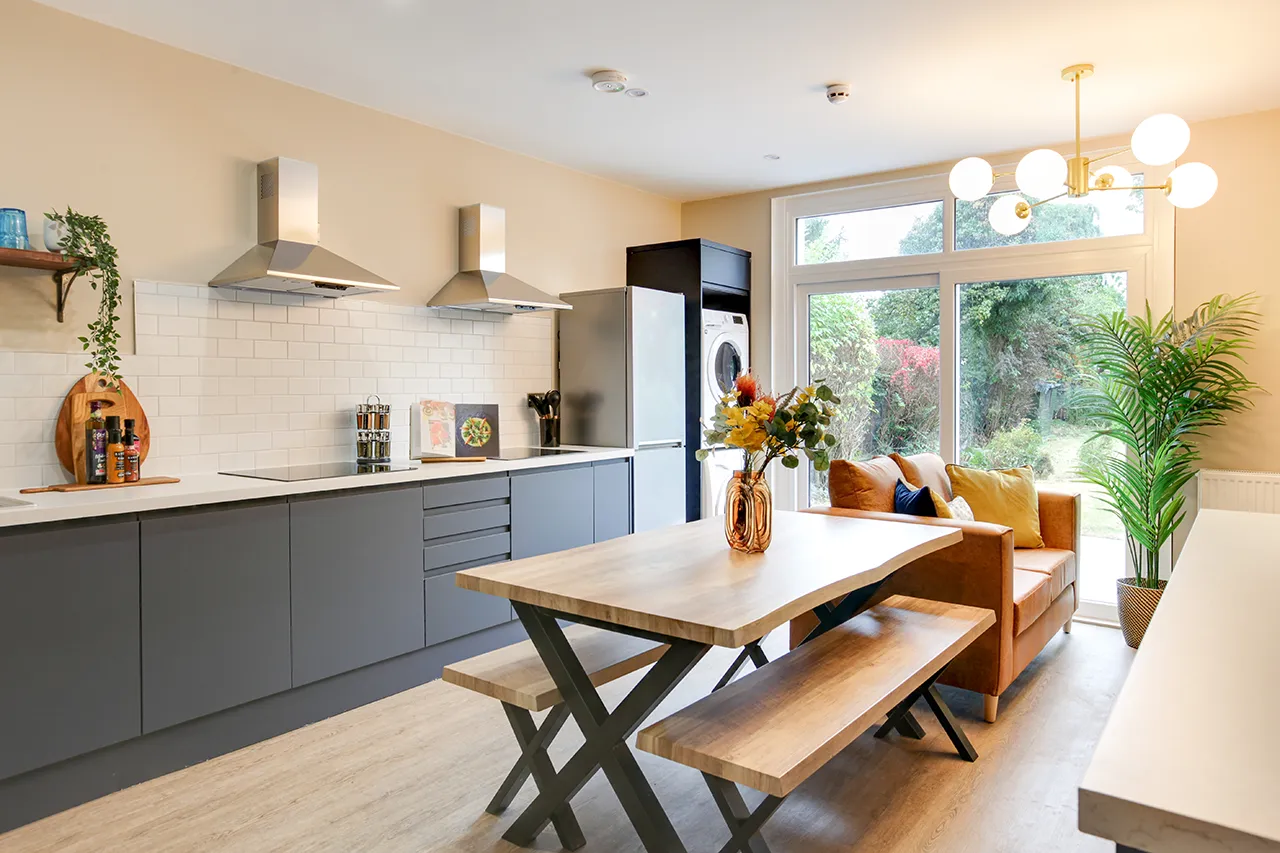
Regardless of planning permission, you’ll need an HMO licence to operate legally, normally for a 5 or 6 person HMO. Licensing ensures you meet safety, amenity, and management standards. Every council will publish their HMO standards on their portal. Room sizes, Fire safety, cooking amenities, bathrooms, and how much of each thing you’ll need, depending on how many people and lots of other requirements..
Almost any house can work as a C4 HMO, but making sure that your property hits the HMO regulations for the amount of people you have in the property is where things are more complicated, not the planning permission element typically. So while change of use from C3 to C4 under PD is a formality in most cases, making sure your property hits the HMO licensing standards is the thing to focus attention on. Back it up with a certificate of lawfulness to add belt and braces, and help with mortgageability and buyer confidence if you’re selling.
6-Bed HMOs vs. Larger HMOs
- Up to 6 occupants: You generally don’t need full planning permission if PD rights apply and there’s no Article 4 Direction. Just ensure compliance with the HMO licensing scheme.
- 7 or more occupants: You’ll need full planning permission for the additional occupants, as this constitutes a change from C4 to Sui Generis. A practical strategy is to operate the property as a 6-bed HMO initially, then apply for the 7th occupant. If issues arise, you’ll have a strong case, as it’s only one extra person.
Building works that require planning permission
Okay, now the use-class part is hopefully a little clearer, let’s tackle the building work element of planning permission as it relates to HMO investors.
HMO’s with 7 or more people need a lot of internal space to fit all of the amenities inside the property. It’s therefore common to see HMO investors spending money on extensions to their property to add more internal space.
Typically this is seen with:
- Basement conversions
- Ground Floor rear extensions
- Side Extensions
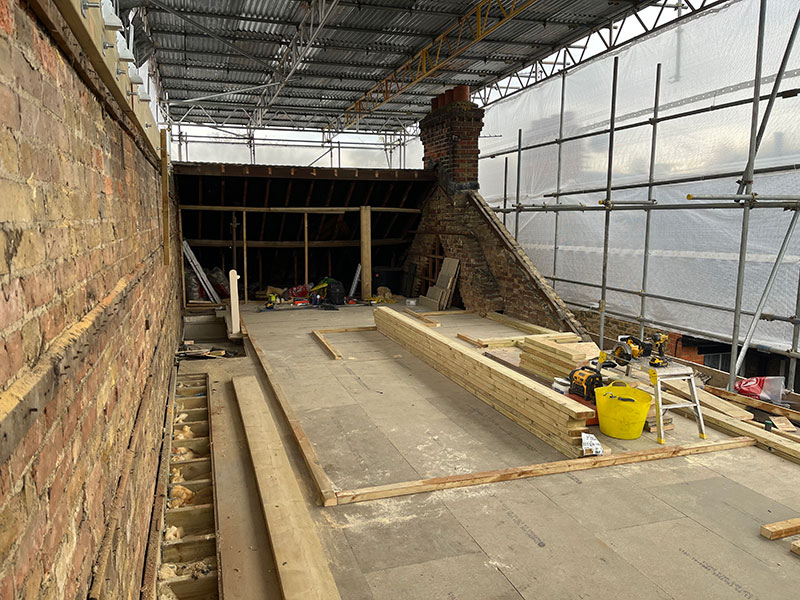
- Dormer Loft Conversion
- L-Shape Double Dormer Loft Conversions
This is where the experience of the investor and the adoption of a good planning strategy can make or break a scheme. There’s no real golden way to do this, but there’s certainly a way to get this horribly wrong.
Key thing to keep in mind, is that Town Planners and Investors are supposed to work together, to improve housing stock, create great schemes that people actually want to live in and that serve the community, both now and in the decades to come.
Town planners in the areas we work in, tend to want to retain large C3 Residential properties for families. Understandably so. But as we shift more into a world where maybe only 3 people are living in that lovely big house, and the alternative is a 9 Bed HMO scheme, and given the context of a housing crisis where much higher density housing is a benefit to people that need a good place to live that’s not miles out of town, it’s becoming more difficult for councils to refuse schemes just on this basis, that it’s a family area.
But, overdevelopment of a property that’s not suitable for a HMO is a sure way to have a tornado of objections and refusals for your scheme, so the first thing to keep in mind is that Town Planners are looking out for the community as a whole, and their focus is as much on bin storage and provision of bike storage, as it is on how much additional space is being added to the property and whether it’s in keeping with what is already there.
So before jumping into adding lofts, converting basements and putting together a scheme for a Sui Generis HMO, here’s a short ticklist we run through that keeps us aligned with what Town Planners are looking at across Kent.
- Does the property have adequate frontage for a basement fire escape and natural light through its window, if you’re converting the basement?
- Will the property ‘lose’ an off road parking spot if a basement lightwell is installed for the basement room?
- Is there side access so that bins can be stored at the rear of the property to keep the neighbourhood looking nice all year round?
- Can the tenants wheel bikes to the rear of the property easily and secure them safely without bringing them through the house, thus decluttering the frontage more?
- Is the property itself of adequate size to support the amount of adults living there as planned? Converting a 3 bed property to a 10 bed property may be less feasible than a 5 bed property, so it needs to make sense in context with its neighbours.
If we have these covered off, and the property itself seems like it would be a good opportunity to help solve the housing crisis with some higher density housing through a Large HMO, we can look at extending the property to add more space, and in particular, which methods of extending would suit best, and which require full planning, and which can be done under PD.
Basement
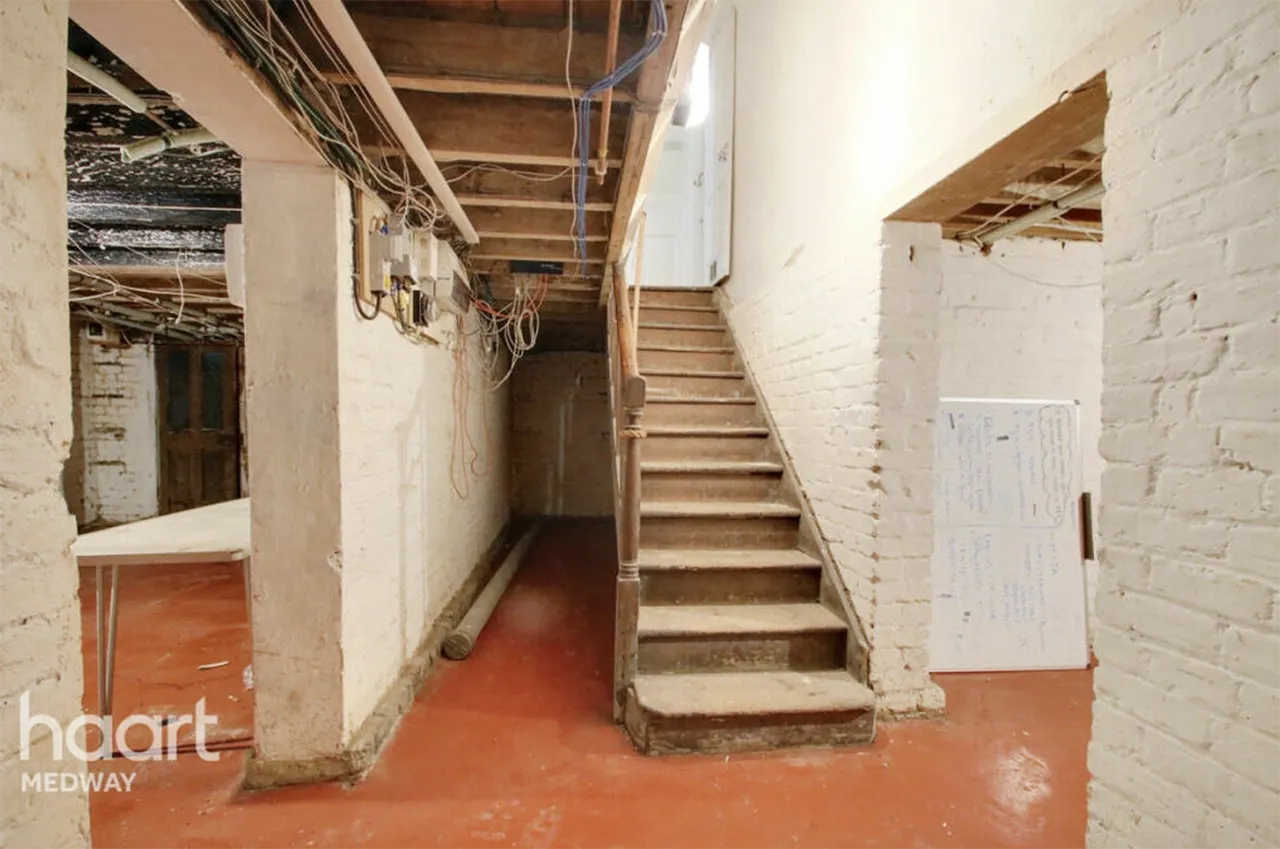
Planning permission to convert a basement is often required, due to the need for adequate natural light and a fire escape, which typically affects the principal elevation of the property which needs approval. This is commonly handled through building a retaining wall and a fire escape with steps and the appropriate opener on the window. Also a big one for Building Control as it needs to be built properly.
Ground floor rear extension
If the property is semi detached, we can go back 6m from the original house (as it stood in 1948), without the need for a full planning application. This is normally plenty if the property is around 5m in width. There are restrictions on blocking the neighbours natural light, and height to be aware of, which can be tricky if your plot is not level front to back. Only 50% of the land surrounding the property can be covered by the extension.
Side extensions
These can be a lot more tricky, again due to natural light, and it depends on the shape of the plot. You can only build up to half the width of the original house as a side extension, and no more than 50% of the land around the house can be taken up by an extension, so a decent sized garden is a must. It can’t come forward of the original house either and can only be single storey under PD. There are also restrictions on height and glass must be obscure.
Dormer Loft Conversion
This type is the easiest, and falls within PD in most cases. But it’s quite restrictive so they can sometimes not be the best use of space. You won’t be able to build up to the edge of the roof so you’ll lose some width, and it must not be built higher than the existing roofline. Planning permission isn’t normally a requirement for adding a dormer. There are volume controls in place of 40 cubic meters for a terrace house for it to be PD, as well as other controls, but these are the main considerations on size.
L-Shape Dormer
These are the style that adds habitable space to the rear side of the loft space, as well as above the outrigger. Ultimately adding a whole second floor to the property. This will almost certainly not fall within PD and will require a planning application as they would normally be above the 40 cubic meters threshold for a terrace house under PD. Better to go for full planning if you’re doing a loft like this because you can design it how you need it to be from the outset, rather than have PD restrictions hampering the size.
Conclusion: Key Takeaways for Maidstone and Kent HMO Investors
Planning permission covers not only the material structure of the building, but also it’s ‘use class’. No building work going on, you may still need planning approval (Sui Generis HMO for example).
A lot can be done under Permitted Development, and in tandem with a good planning strategy and use of a lawful development certificate. Full planning may not be necessary, but it does give a lot more flexibility regarding size.
My intention here is to help turn the planning portal into something a little more easily digested for HMO investors in Maidstone and Kent. There’s a lot more to planning permission than in this post. It’s a complex topic, but at least for HMO investors in Kent just starting out, I hope it’s been helpful.
We do multiple projects a year all over Kent and the south east. Our team can bring clarity to you and your vision, so if you’d like to speak with us, book a call below and we’ll send you some examples of whats working in Maidstone and giving great returns in 2025 with some of our award nominated case studies as well!
