

If you’ve ever considered converting a property into an HMO, you’ve probably heard the success stories: high ROI, commercial refinancing opportunities, and strong tenant demand in areas like Maidstone, Medway, and Gravesend.
But here’s what those stories often leave out: the risks, the unexpected challenges, and the sheer amount of expertise required to navigate the process.
We’ve been through it all. From complex planning battles to unexpected structural surprises, we’ve learned that successful HMO conversions don’t just happen, they’re earned through preparation, experience, and a relentless focus on detail. These lessons have helped us deliver award-nominated projects and high-performing HMOs in Kent.
Let me show you the risks, how we tackle them and hopefully we can pay some good vibes forward from the people that helped us when we needed it too.
1. Planning Permission and Licensing: Don’t Wing It
Planning is often the first stumbling block for new investors. If your HMO is in an Article 4 area, like some parts of Maidstone, even converting a small property into an HMO requires full planning permission. And thats even before the naughty ‘removal of PD rights to go from C3 to C4’ that we see sometimes as a condition on an approval letter.
A4 isn’t a deal breaker, and neither is a conservation area. It depends precisely what is being protected, and ultimately, how open to a HMO scheme the Town Planners are.
On one project in Medway, we had to navigate a property with limited parking availability on a one way street. Without the right planning consultant, this would’ve been a dealbreaker. By conducting a parking survey and providing a well-documented bin storage plan, we not only secured approval but also built credibility with the council for future projects.
Knowing and understanding the HMO licensing regs is one thing, a solid first step. But in the decade or so we’ve been in the HMO space, we’ve seen a lot of variation in how regulations are applied, and even schemes that are within the rules can get ‘shadow banned’ bu committee, simply because they dont like it. Totally not fair, and expensive to battle at appeal, but a feature of the process nonetheless.
The solution? Go a level deeper into what Town Planners are looking for when they approve schemes, and then use that as your starting point for your search. Rather than finding a deal that works, and then trying to solve unsolvable issues with a planning strategy and swim against the current, look for investments that are going to be hard to say no to as they just make sense, and work with planning consultants and HMO specialist architects that can guide you there.
How to Avoid the Risks:
- Sanity-Check Your Scheme: A planning consultant can highlight red flags before you even make an offer. Is the property viable? Can you do what you need under Permitted Development rights or do you need full planning?
- Plan Smart for Article 4: If you’re buying in these areas, assume everything will need approval and factor this into your timeline and costs.
- Learn from Successes: Study approved schemes in your area to understand what councils expect—things like parking provisions, fire escape routes, and external appearances matter…not just a floorplan with ensuites drawn on.
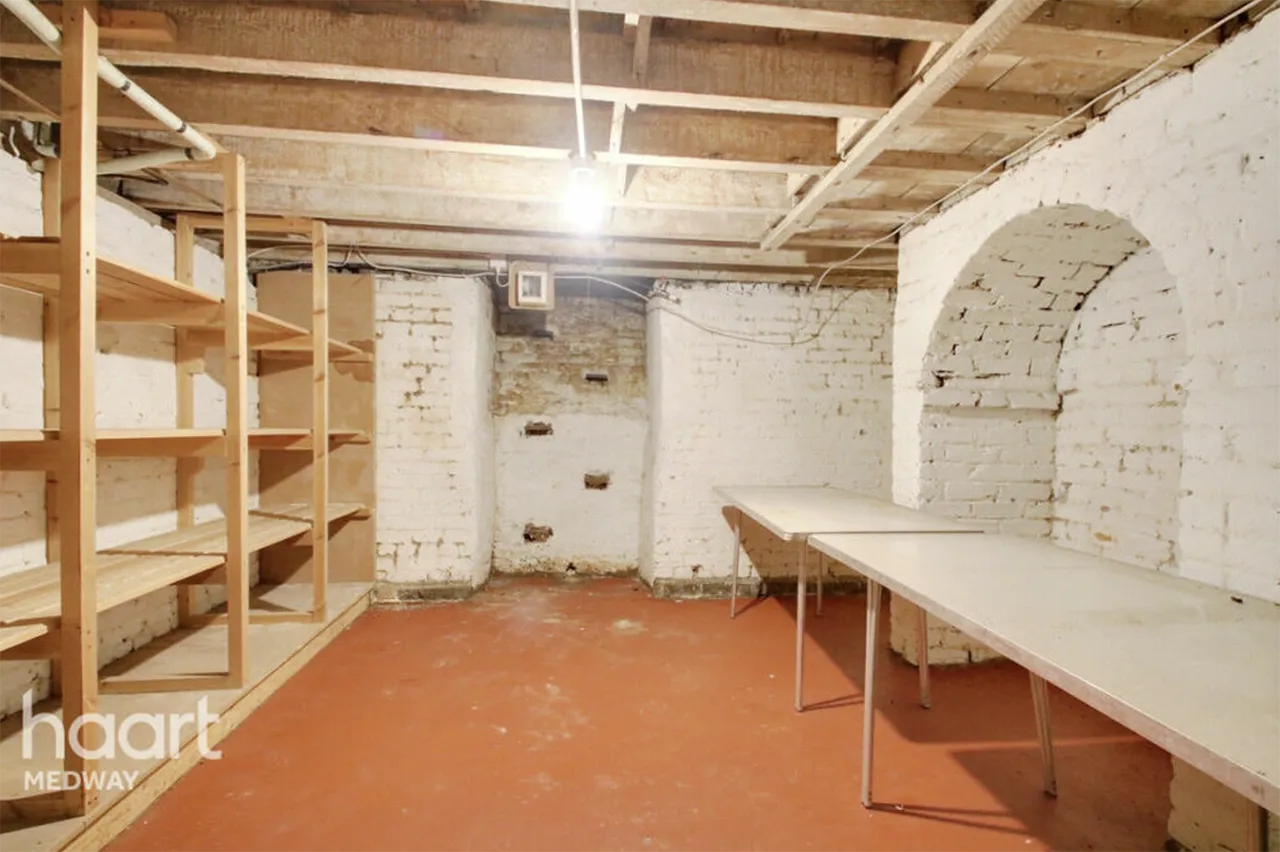
2. Alterations in the Basement: There’s a wrong way to do them
Basements can unlock massive potential in HMOs, but they come with their own set of risks. Without proper tanking (we use the John Newton Tanking System) and ensuring sufficient head height, natural light and an adequate fire escape route that’s approved by the relevant fire service, your project could fail to meet both room licensing standards and mortgage requirements.
In Kent, we took on a property with an existing basement, knowing that the head height was just shy of regulation standards. Rather than dig down further (which would’ve required underpinning), we adjusted the ground floor joists to raise the ceiling height as lenders tend to shy away from properties with underpinning, which makes lending more expensive and the ROI lower. It was a cost-effective solution that improved the deal and kept the property mortgageable. Looks a lot better too.
How to Avoid the Risks:
- Get the Right Surveys: Timber and Damp surveys, and a proper solution to making them watertight so they become usable space, not just on paper but for tenants as well, is key. If it fails, it can be a disaster. Converting basements is a great way to turn a disused space of an existion property into something of use for the community, and it’s cost effective to do it as well, just use a good system to manage water.
- Tanking Systems: Always invest in a good tanking system to prevent damp. Cutting corners here is a recipe for tenant complaints and ongoing maintenance costs.
- Consider Ground Floor Adjustments: If you’re short on head height, raising the floor joists is often more practical (and cheaper) than digging down.
3. Compliance and Fire Safety: No Room for Error
Compliance is where HMOs can be really tricky. It’s not just about meeting legal requirements or getting planning approval or building control signoff. It’s about designing a property that’s safe, functional, and appealing to tenants.
One of our Medway projects required a complete overhaul of the fire escape route during the design stage. Without early input from our fire safety consultant, and getting our plans submitted to Kent Fire nice and early, we could’ve completed the works only to face rejection from the fire service during the final inspection. Doing this early saved us thousands in reworks and months of delays when it came back with alterations needed.
It can, and does happen. Someone’s not happy with something. It’s totally fine, they’re doing their job. The key here is de-risking that, and making sure you know as early as possible, as you don’t want to be ripping down walls at the end of your project just to rebuild them again. And pushing back on it is a total waste of time, so be prepared, submit your plans, get them approved by planning and Fire, and you’re good.
How to Avoid the Risks:
- Plan Early with Fire Safety in Mind: Fire escape routes, alarm systems, and fire doors need approval, ideally before work starts. Certainly before they’ve been installed.
- Hire Specialists: From architects to fire safety inspectors, you need a team that understands HMO-specific requirements.
- Don’t Cut Corners: Compliance isn’t just about ticking boxes—it protects your tenants and your ability to refinance the property smoothly after the build.

4. Build Budget Overruns: Plan for the Unexpected
HMOs are notorious for throwing up unexpected costs. Whether it’s hidden damp in a Victorian terrace or asbestos in a conservatory roof, failing to budget for surprises can derail even the best-planned projects. And these properties are old. Solid in most cases, but old. They can be full of surprises.
The most belt and braces approach to getting a good idea of the project cost, is to go to a Quantity Surveyor with your drawings and have them price it for you. They’ll give you a full itemised cost. That way, if your builder has missed something off of the price, and it turns out its expensive, you’ll know ahead of time, or it’s an indicator they haven’t fully understood. Better than going in blind. Obviously there’s a cost to doing this, it’s detailed work and not free. But, it’s super valuable to have an open line of communication with an experienced QS, especially when it comes to all of those ‘extras’ mid project for unforseens. Don’t want those costing more than they should!
How to Avoid the Risks:
- Create a Detailed Budget, or have QS price it for you: Try to fix as many costs with the builder as possible, rather than run on estimates. Never work on a day rate if you can help it. Have a QS price it and keep it in your back pocket to give you some direction on price. Helpful if its your first HMO.
- Strip out FIRST, before getting quotes: I learned this from a mentor. The inflated prices builders give are mostly due to uncertainty, rather than greed. If they dont know whats behind a wall, they’ll price for the worst case scenario. Play that out over a whole project, and the price can be a lot higher than it should. Pay a stripout firm, or even your builder, to come in in phase one, strip everything, back to brick if you’re planning on insulating, so they can see exactly what they need to do, with less unknowns. Then quote from there. Needs to be done anyway, but this way, everyone gets a look into the project as it is…not how they imagine it is, and the price should be more accurate.
- Stress-Test Your Figures: Materials prices fluctuate. During Covid, plastering a 5 Bed HMO, we couldn’t find plaster for love nor money. Plaster is cheap, but not when everyone wants it. We factor in 10%-15% into the budget in all of our projects to account for price fluctuations dictated by the market…we’re looking at you ‘Howdens’! If you save it, great, just don’t leave yourself short right at the end of a project and revert to cost saving tactics, like white walls grey carpets, or cheap appliances. It’s a false economy.

5. Exit Strategy: The Commercial Valuation End Game
Unlike buy-to-let, where refinancing is relatively straightforward, HMOs use commercial valuations based on rental income. The catch? Small differences in the valuation methodology can swing your numbers by tens of thousands of pounds.
When finding a lender through your broker, the property will need to be valued by an approved surveyor from their panel. Ever wondered why some charge £2000, and some charge £4500? How can it be? Wouldn’t everyone just go with the cheapest if it’s the same?
Thing is, they’re not the same. Vaulers use a similar methodology, but it’s not exactly the same. And how they exactly calculate the net rent, or the comparable HMO sales they use, and the exact method they use to calculate the value of the property as a HMO, have a much bigger effect than with a single let property where things are a lot more simple and the market is more clear cut on what a residential property is worth.
So before just going for the cheapest, call the surveyors and speak to them, ask them how they value a hmo, what costs they deduct from the gross, what the areas yield is, and understand the differences. You’ll see how big a difference it can make after a few conversations. Plus, i love talking to surveyors, some of the most skilled people in the property industry, and packed full of knowledge. Well worth your time.
How to Avoid the Risks:
- Plan Early for Valuation: Work with brokers and local valuers who understand HMOs and their income-based methodology. Sniff out their process before choosing them and run the numbers yourself based on their methodology. Make sure they are on the panel of the lender you intend to use (HTB, Shawbrook etc).
- The first Cohort of Tenants: These are the set that will ultimately demonstrate the commercial value by what they pay. Lower rents, means a lower valuation if you’re using a commercial valuation, so take a view that keeps this in mind, however tempting it might be to just rent it quickly… The small reductions in rent to get it rented out and the income coming in, have a big impact on the commercial valuation.
- Stress-Test the Numbers before you start: Ensure your project remains viable even with a conservative valuation. Mortgage rates, cost deductions, get used to playing with a spreadsheet and finding best and worst cases, so you might plan better.
Preparation: The Difference Between Success and Failure
If there’s one thing we’ve learned from our projects, it’s this: preparation is everything. From planning consultants who sanity-check your scheme to fire safety specialists who keep your project from stalling at the last hurdle, and having a good relationship with building control so you, and they understand what’s expected and being delivered, having the right team—and the right process—is essential.
Use a CRM, log each step, each contact you pick up and take that knowledge through to your next project so each time you go through the process of buying, planning, building and letting out a HMO, you make incremental improvements towards a robust system.
At Pineapple-Group, we’ve developed a system that works, backed by a team of experts who’ve been there and done it. Whether it’s navigating Article 4 areas, dealing with structural surprises, or securing top-tier valuations, we’ve seen it all. Every scar has a story, and a step in our process, so feel free to reach out to us, it’s likely we’ve been where you are now. And we’re happy to help.
